
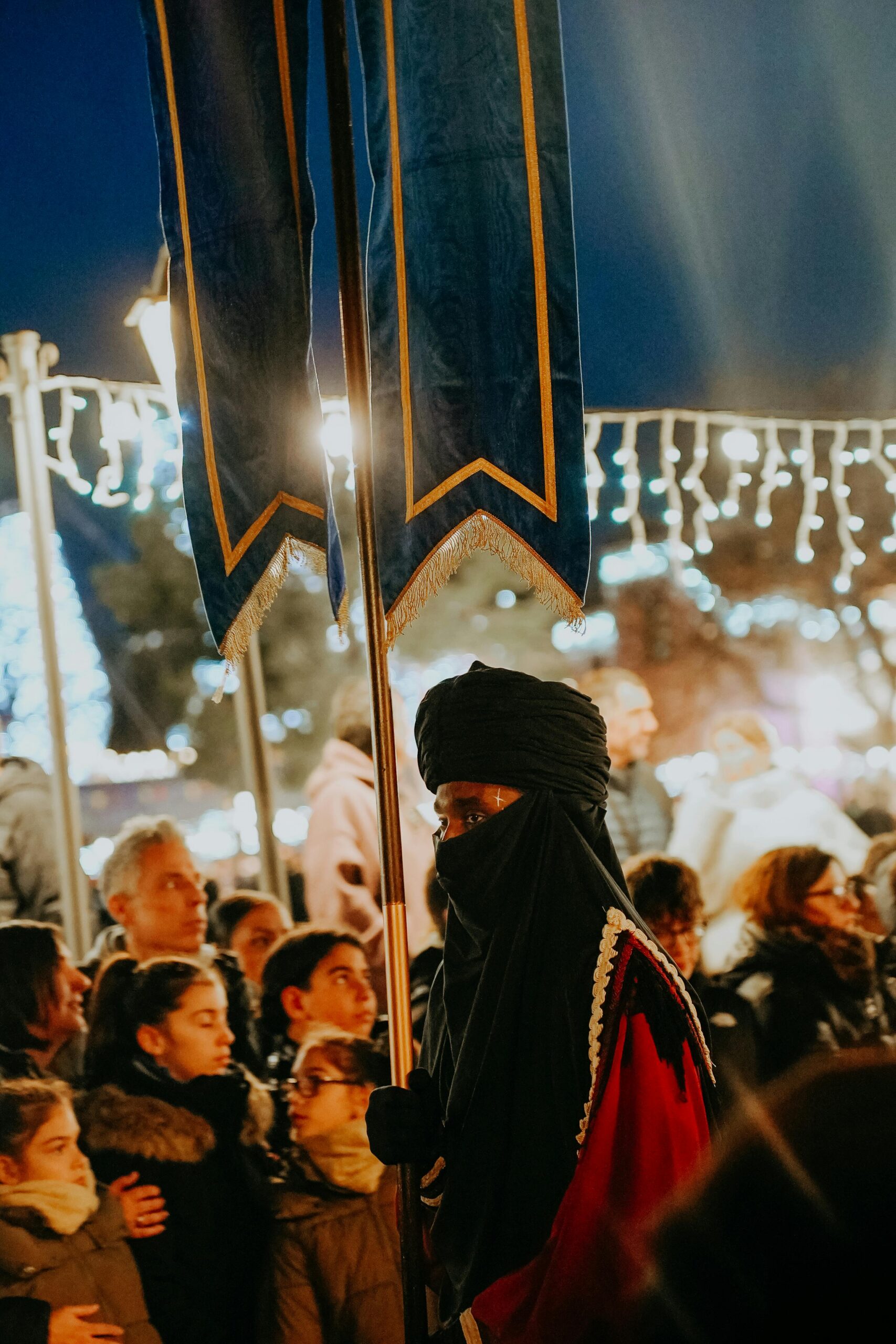
January 5 and 6 in Spain
In Spain, the main Christmas celebration for children does not happen on December 25 but a little later, on January 5 and January 6. These two days are dedicated to the tradition of the Día de los Reyes Magos, one of the most important festive events of the year. The celebration is connected to the story of the Three Wise Men who, according to Christian tradition, traveled to Bethlehem to bring gifts to the baby Jesus. These figures are known in Spanish as Melchior, Gaspar, and Balthazar. On the evening of January 5, almost every town and city in Spain organizes a festive parade called the Cabalgata de Reyes. During these parades, floats carrying the Three Kings move through the streets while people gather to watch. The kings and their helpers throw candies to the crowds, especially to children waiting along the route. The streets are often full of families, music, and celebration. That evening, many children place their shoes near the door or window at home, sometimes leaving food or water for the Three Kings and their camels. According to tradition, during the night the Three Kings bring presents for children, similar to the role Santa Claus plays in other countries. January 6 is the official holiday and the day when gifts are opened. Families often gather for meals, and bakeries prepare a traditional cake called Roscón de Reyes. The cake is ring-shaped and usually decorated with candied fruit. Inside the cake there are small surprises: a figurine and sometimes a dried bean. The person who finds the figurine is said to have good luck, while the one who finds the bean may have to buy the cake the following year. For travelers in Spain, these days can be very interesting to experience. The parades on January 5 are often large events, and many town centers become lively and crowded. Shops may close earlier on the evening of the parade, and on January 6 many businesses remain closed because it is a national holiday.