
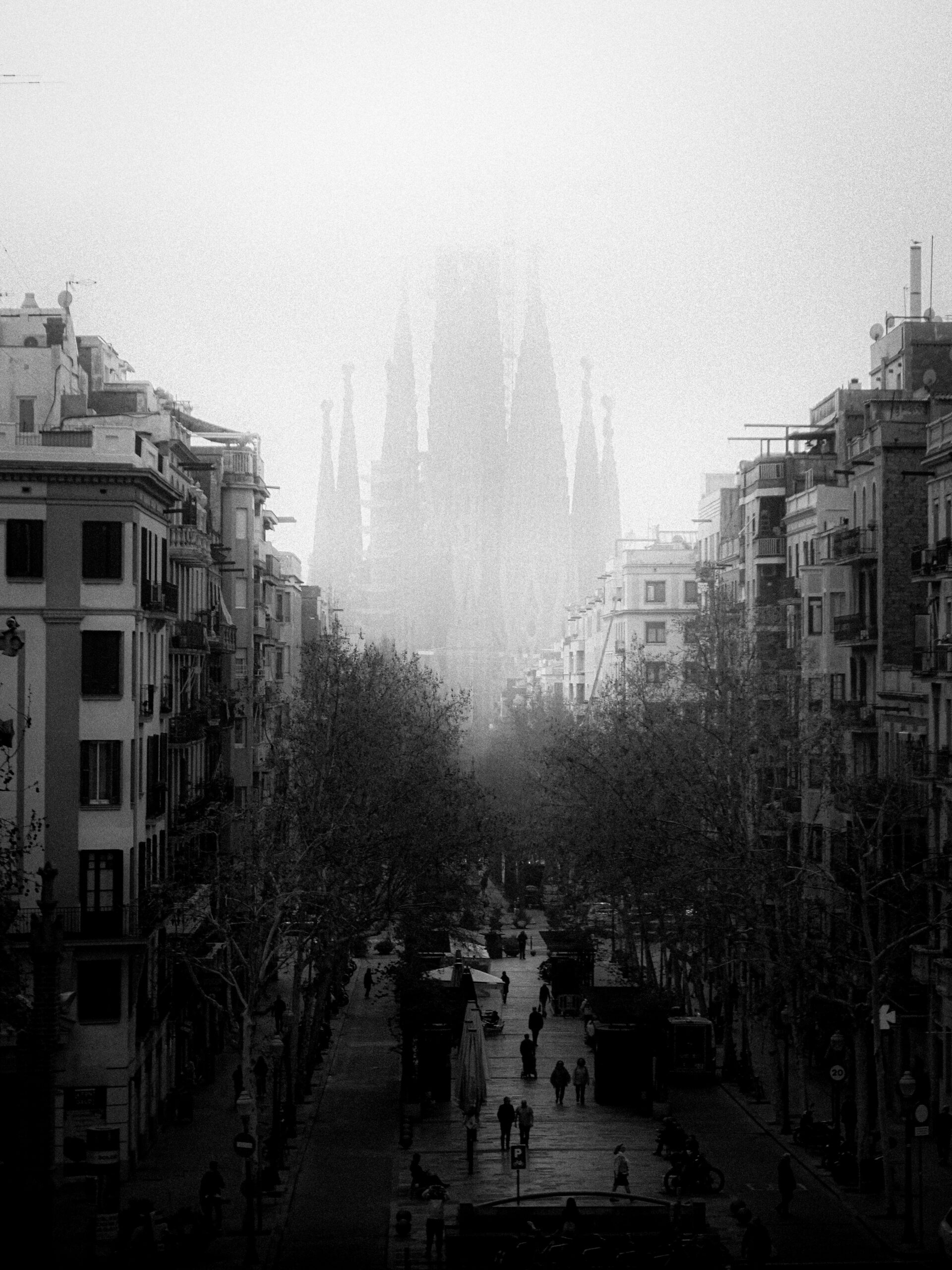
Antoni Gaudí left his mark not only on Barcelona but across much of Catalonia, and during our motorhome journey we made it a point to visit all of his major works in the region. Seeing them in person provides a deeper understanding of his vision, the creativity behind every curve, and the way his designs interact with their surroundings.
Our tour began in Barcelona Sagrada FamiliaNext, we explored Park Güell works in Barcelona, such as Casa Batlló and Casa Milà (La Pedrera). Walking along the façades, we were struck by the originality of balconies, the sculptural chimneys, and the imaginative use of ceramics and stone. These buildings transform everyday streets into a visual experience, showing how Gaudí integrated creativity into daily life.
Beyond Barcelona, we traveled to other towns in Catalonia to see his works in different contexts. In Reus, his birthplace, we explored early designs and the local influence that shaped his vision. In Colònia Güell, the Güell Crypt revealed his experimental approach to structural engineering, with catenary arches and unique geometric forms. This site is particularly fascinating because it shows the ingenuity behind his techniques, some of which were later applied in the Sagrada Familia.
We also visited smaller, less-known Gaudí works scattered across Catalonia. Each site had its own character, from modest decorative elements in local buildings to private residences commissioned by wealthy patrons. Seeing all these works together provided a sense of continuity in his style, from whimsical forms in public parks to monumental religious architecture.
Traveling by motorhome made it possible to move between towns at our own pace, stopping for short visits or overnight stays as needed. The freedom to approach each site without rushing allowed us to fully absorb the details of his designs and the surroundings. It also highlighted the relationship between Gaudí’s architecture and the natural and urban landscapes around it, from city streets to quiet countryside.
Experiencing Gaudí’s full body of work across Catalonia is not only a journey through architecture but also a journey through the history, culture, and artistic spirit of the region. Every building, park, and monument tells a story, and seeing them in person gives a perspective that no book or photo can fully convey.