
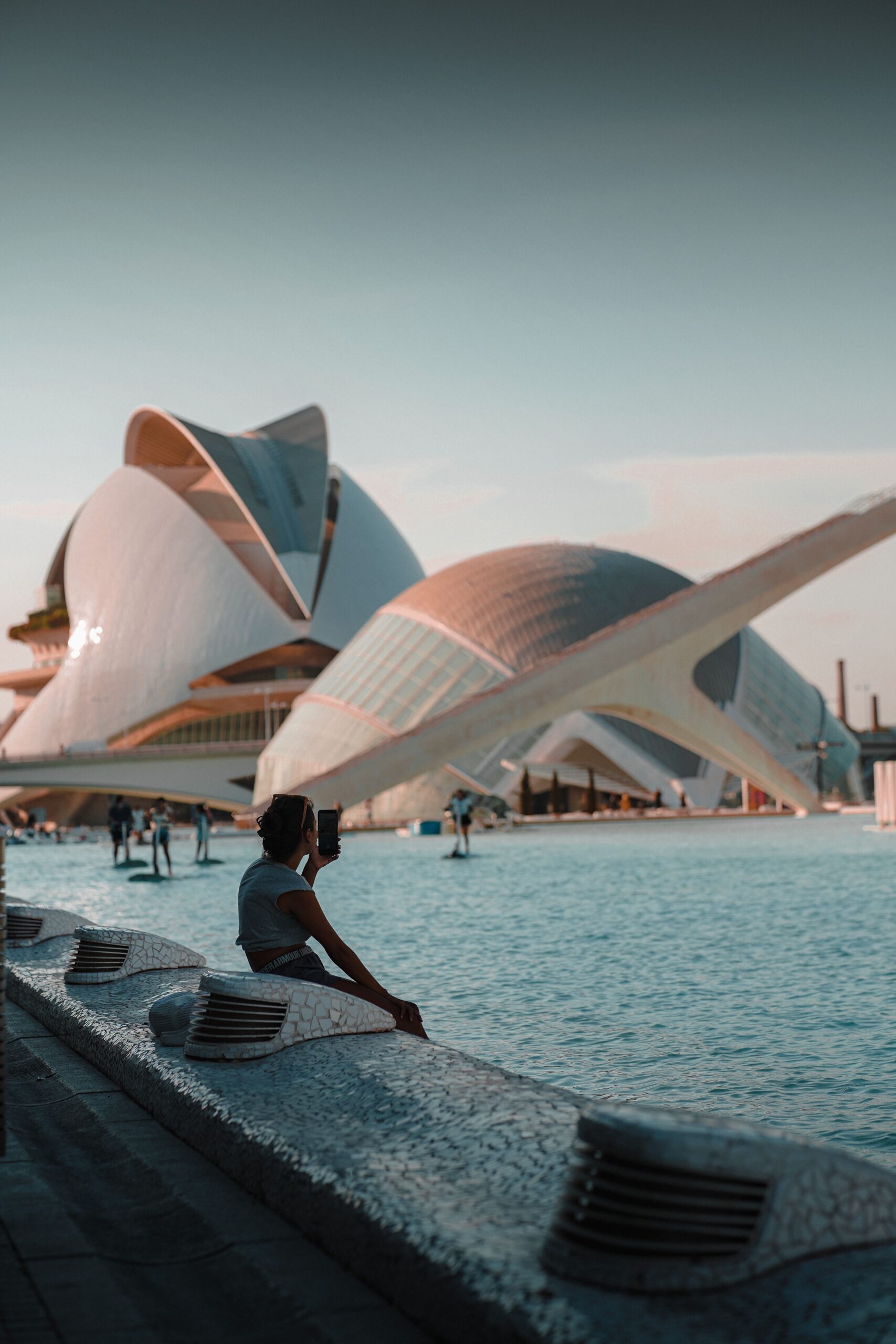
Valencia is the capital of the Valencian Community and the third-largest city in Spain, located on the Mediterranean coast at the mouth of the Turia River. Founded by the Romans in 138 Before Christ as Valentia Edetanorum, the city has been shaped by Roman, Visigothic, Islamic and Christian rule, becoming one of the most influential commercial, cultural and maritime centres in the western Mediterranean.
The Roman settlement developed on a small island protected by branches of the Turia River, occupying a strategic position along the Via Augusta, the principal Roman road crossing eastern Hispania. After the decline of the Roman Empire, Valencia became part of the Visigothic Kingdom before being conquered by Islamic forces in 714. During almost five centuries of Islamic government, known as Balansiya, sophisticated irrigation systems transformed the surrounding plains into one of Europe’s most productive agricultural regions. Many of these canals remain in use today, while the historic Tribunal de las Aguas de la Vega de Valencia, recognised by the United Nations Educational, Scientific and Cultural Organization as Intangible Cultural Heritage, continues to settle irrigation disputes every Thursday outside Valencia Cathedral using traditions dating back many centuries.
King James the First of Aragon captured Valencia in 1238, establishing the Kingdom of Valencia as one of the constituent states of the Crown of Aragon. During the Late Middle Ages, the city became one of Europe’s wealthiest ports through the export of silk, ceramics, rice and agricultural products. The magnificent La Lonja de la Seda, today a United Nations Educational, Scientific and Cultural Organization World Heritage Site, remains one of the finest examples of late Gothic civil architecture anywhere in Europe and reflects the prosperity generated by international trade.
Modern Valencia successfully combines its historic centre with contemporary architecture. The Cathedral of Valencia, built over the former Great Mosque, claims to house the Holy Chalice traditionally associated with the Last Supper. Nearby, the Central Market remains one of Europe’s largest historic food markets, while the former riverbed of the Turia River, diverted after the catastrophic flood of 1957, has been transformed into the Jardín del Turia, a park extending for almost nine kilometres across the city. At its eastern end stands the Ciudad de las Artes y las Ciencias, designed primarily by Santiago Calatrava and Félix Candela, now one of Spain’s best-known architectural landmarks.
Valencia is also closely connected with aviation. Aeropuerto de Valencia, officially known as Aeropuerto de Valencia-Manises, lies approximately eight kilometres west of the historic centre in the municipality of Manises. Opened in 1933, it has grown into one of Spain’s busiest airports, serving millions of passengers each year with domestic, European and intercontinental connections. Unlike several regional Spanish airports constructed during the early twenty-first century, Aeropuerto de Valencia-Manises has experienced steady long-term growth supported by the metropolitan area’s population, tourism and industrial economy.
Its development contrasts with several other airports across Spain. Aeropuerto de Castellón-Costa Azahar, located in the Province of Castellón, became internationally known because commercial flights began several years after its inauguration. Aeropuerto Central Ciudad Real was designed as a privately financed international hub but entered bankruptcy after attracting far fewer passengers than expected. Aeropuerto de Huesca-Pirineos struggled to generate regular traffic despite its proximity to the Pyrenees, while Aeropuerto de Lleida-Alguaire evolved into a specialised airport combining passenger services with aircraft maintenance and pilot training. These airports illustrate how Spain’s rapid infrastructure expansion produced very different outcomes depending on geography, economic demand and long-term planning.
For motorhome travellers, Valencia offers one of Spain’s most rewarding city visits, although reaching the historic centre usually requires the use of public transport or bicycles from the overnight stop. During the stay, the parking area proved well organised and suitable for larger motorhomes, with straightforward access and convenient connections into the city. The location allowed the vehicle to remain safely parked while exploring the historic centre, the Turia Gardens and the waterfront. Despite the size of the metropolitan area, overnight conditions were generally quiet, making the stop practical for visiting one of Spain’s most historically significant cities.
Beyond its monuments, Valencia is recognised as the birthplace of paella, although the traditional recipe originated in the rice-growing wetlands surrounding the Albufera Natural Park rather than within the city itself. Every March the city hosts Las Fallas, one of Europe’s largest cultural festivals, during which hundreds of enormous artistic monuments are displayed before being ceremonially burned on the night of La Cremà. Together with its Roman origins, medieval trading heritage, modern architecture and Mediterranean character, these traditions make Valencia one of the most complete historical and cultural destinations in Spain.